Online Music Lessons for Autism
Using rhythms and music to teach academic concepts to reinforce cognitive development.
Online lessons for students anywhere in the world.

The online lessons use rhythms to teach positive communication, social skills, and academic concepts. This is no ordinary music therapy protocol: it’s a learning environment that engages students through the power of music.
The lessons are successful in addressing COGNITIVE, EMOTIONAL, and PHYSICAL goals. Through inventive multi-sensory exercises, the sessions teach and enhance skills such as maintaining focus, using memory, sequencing, sign language, laterality, recognition and use of numbers, shapes and colors, spatial awareness, fine and gross motor coordination, following instructions, and communication.
Through a perceptual motor match: VISUAL, TACTILE and AUDITORY combined with SPEECH, the student sees the lesson, feels it, and then hears it as he/she speaks or sings the answers. It is this redundancy of information that facilitates positive results.
The only equipment necessary is a small hand drum and a computer or iPad with Skype. Call or write for a complementary 20 minute session.

Online Piano Lessons for Autism & Special Needs Students
Learning piano can be a powerful way for children with autism to build focus, structure, and confidence, but only when it’s taught in the right way.
These online piano lessons for autism are designed specifically for kids/children and teens who need a clear, supportive, and distraction-free learning environment. Instead of traditional methods that can feel overwhelming, this approach uses pattern-based learning, rhythm, and simplified musical language to make piano accessible and engaging.
It is a structured learning system that uses music as a tool to strengthen cognitive and communication skills. These lessons are suitable for complete beginners as well as students who may already have some experience. So, whether your child is just starting or needs a different approach, the structure is designed to meet them at their level.
Why Traditional Piano Lessons Don’t Always Work
Many parents try standard piano lessons and quickly notice a problem:
Too much information at once
Not enough structure
Less understanding of special needs learning styles
For a child with autism, this can lead to frustration or withdrawal. These lessons are built differently, from the ground up, to match how your child processes and responds to information.


A Structured Learning Approach
Each session focuses on small, achievable steps that build over time. Using a combination of visual cues, repetition, and rhythmic patterns, students begin to:
Understand musical structure without confusion
Improve memory and sequencing skills
Develop better hand coordination
Stay engaged for longer periods
More Than Just Piano Skills
While learning to play piano is a meaningful goal, the real value goes beyond music. Parents often seek out piano lessons for autistic children because they want to help with:
Attention and focus
Following instructions
Confidence and independence
Communication skills
Through consistent, guided sessions, students begin to develop these abilities in a way that feels natural, not forced. These online lessons are effective for a wide range of learners, including children who struggle in traditional classroom settings.
What Makes these Lessons Different
This program combines music, rhythm, and cognitive training into a single experience. Students don’t just play notes, they learn to:
Recognize patterns
Anticipate sequences
Connect sound with movement
Engage with structured tasks
Because of this, the lessons have a positive carryover into daily routines, including schoolwork and communication at home. These online piano lessons for autism are available to families across the United States.
Online Drum Lessons for Autism and Special Needs Students
Beautiful Beats Class with Stephen Flinn
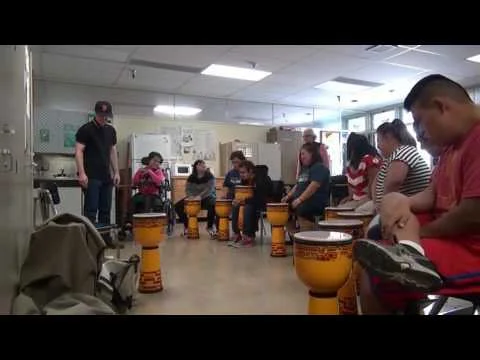
Rhythm is one of the most natural ways for children to connect, respond, and communicate. Beautiful Beats is a drumming class that uses rhythms to teach positive communication, social skills, and academic concepts. This is no ordinary drumming circle: it’s a learning environment that engages students through the power of music.
These online drum lessons for autism use percussion to help children and teens develop focus, and coordination in a way that feels active and engaging. Unlike traditional lessons, this program is built specifically for students with special needs, using a structure that encourages participation and progress. It is an easy learning system designed to improve cognitive and communication skills.
Why Rhythm Works So Well
For children with autism, rhythm is easier to process than abstract instructions. It provides predictability, structure and immediate feedback. So, through simple rhythmic patterns, students can begin to understand timing, sequencing, and response, all essential building blocks for learning and communication. The setup is easy, and the environment is designed to keep your child comfortable and engaged.


A Hands-On, Engaging Learning Experience
Each lesson focuses on active participation, not passive instruction. Students use a drum or percussion instrument to:
· Learn basic grooves and rhythms
· Follow patterns and cues
· Practice coordination and timing
· Engage in call-and-response exercises
Building Communication through Rhythm
One of the most valuable aspects of these drum lessons for autistic children is how rhythm supports communication. Among many other vetted techniques, Stephen uses a combination of phonics, movement, and repetition, students begin to:
· Respond to instructions more easily
· Participate in structured interaction
· Express themselves through rhythm
· Develop early communication patterns
These lessons are designed for:
· Autistic children and teens of all ages
· Students with ADHD or attention challenges
· Individuals who benefit from movement-based learning
The sessions are adapted to match each student’s ability level, ensuring they can engage without feeling overwhelmed.
Cognitive and Behavioral Benefits
Parents often notice that the benefits extend beyond lessons into daily routines and social situations. Over time, rhythm-based learning supports:
· Improved attention span
· Better memory and sequencing
· Stronger motor coordination
· Increased ability to follow instructions
Learn from Home, Anywhere in the U.S.
These online drum lessons for autism are available nationwide. The best way to understand how your child responds to rhythm-based learning is to experience it.